The Humble Seed
He has told you, O man, what is good;
and what does the Lord require of you
but to do justice, and to love kindness,
and to walk humbly with your God…
Micah 6:8
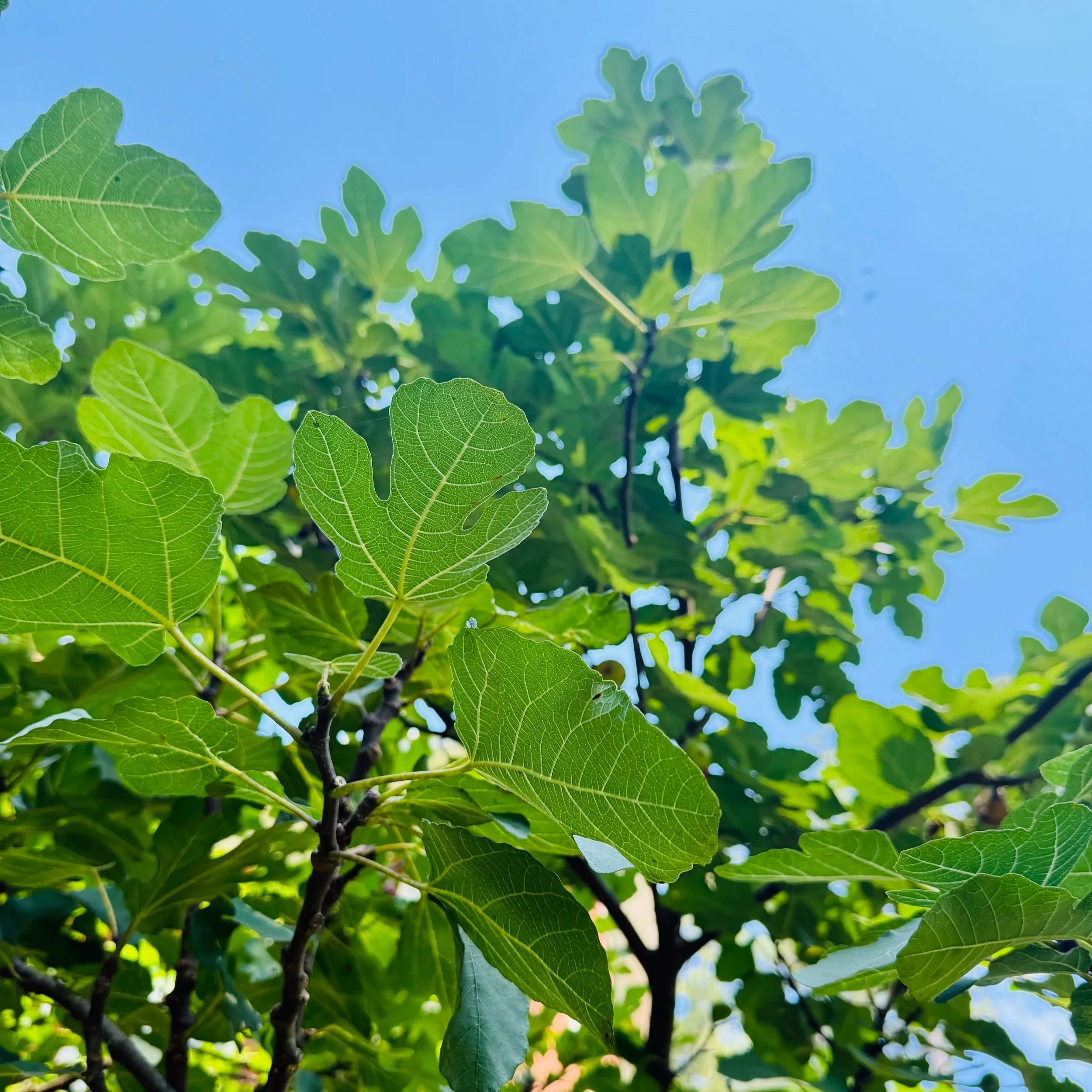
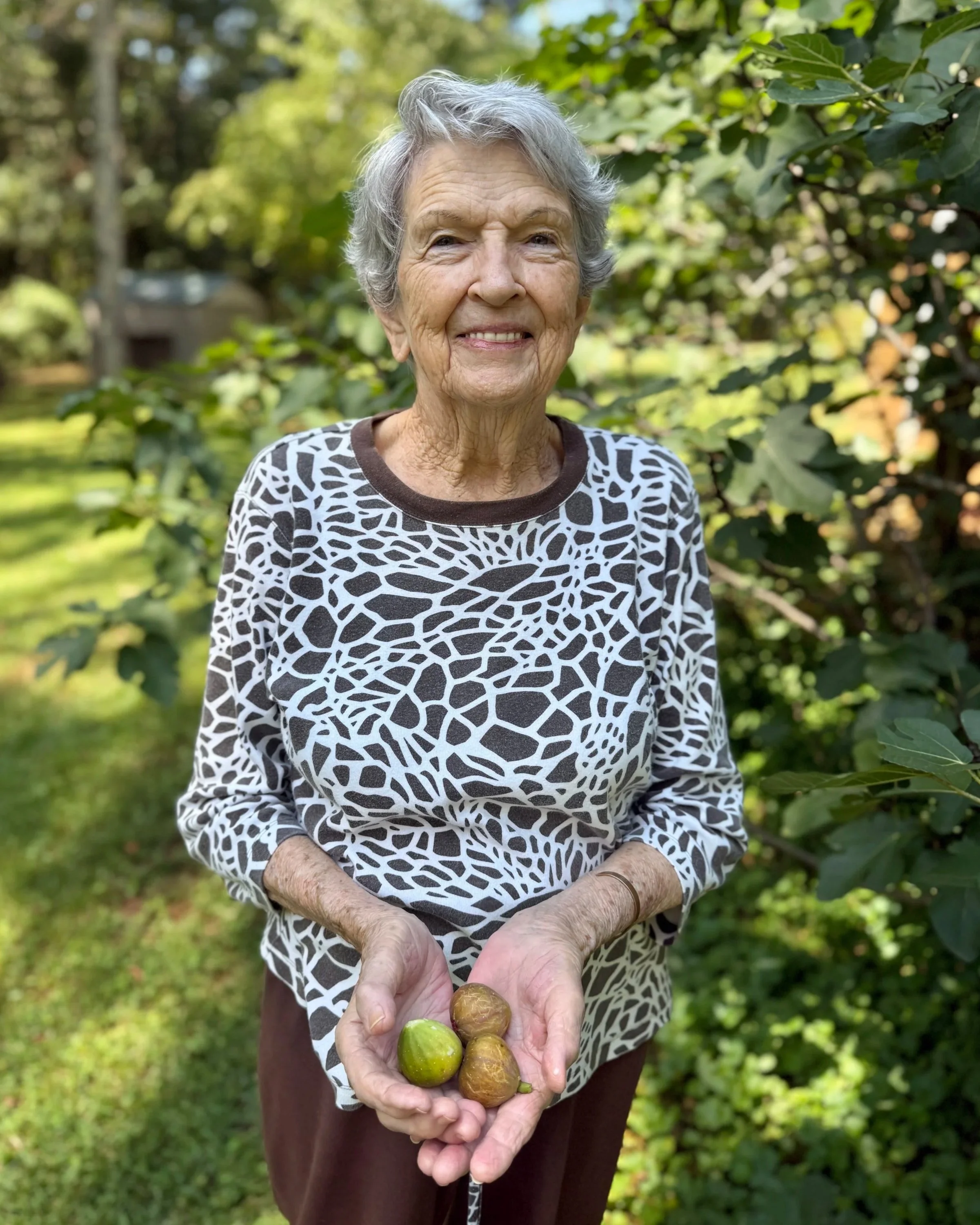
I know a lady who has a fig tree. This tree rests in her backyard and reaches nearly two stories tall. During my most recent visit, I was blessed with the opportunity to help her harvest some figs from the quiet giant leaning against her home. She laughed the whole time I took candids of her picking figs for it’s a simple something she has done all her life. She being a gardener, and the daughter of farmers who survived the Great Depression, pausing for a picture while picking figs was of course hilarious to her. I on the other hand, blinked back tears while my heart embraced this memory.
For her, she was just a woman reaching for more figs. But as her granddaughter, I saw a woman reaching for more of Jesus.
With every fig she found, I couldn’t help but think of how happy Jesus would have been had he come across this size of a fig tree with so many figs on the road from Bethany. In Mark 11 and Matthew 21, Jesus is walking to Jerusalem during the final week before his crucifixion. Along the way he finds a fig tree and looks for any figs he can eat from it…none can be found. Jesus then curses the fruitless fig tree, which then begins to wither.
No, Jesus was not just really hangry. While I myself have felt like cursing the cupboard when no cookies can be found… there was a greater purpose behind Christ’s passion. I love how Dr. Charles Stanley unpacks this story of Jesus and the fig tree:
When Jesus entered Jerusalem, the hosannas and citywide profession of His messiahship were loud and enthusiastic. It must have seemed a stunning triumph.
But Jesus realized that outward appearances don’t necessarily indicate universal or even authentic agreement. At the time of the cheering, in fact, He was en route to the temple, where money changers were evidence of that very truth. And so our Savior had wept as He neared the city, because the people “did not recognize the time of [their] visitation” (Luke 19:44) or the way to avoid what was now inescapable judgment.
The gospel writers then inserted a rather curious anecdote about Jesus approaching a distant fig tree in leaf, since He was hungry. Mark 11:13-14 tells us, “He found nothing but leaves, for it was not the season for figs. He said to it, ‘May no one ever eat fruit from you again!'”
Why would Jesus, the Creator of fig trees, curse one for not bearing fruit out of season? The question seems baffling—that is, except to those familiar with Middle East fruit crops. They would realize small edible knobs, or taqsh in Arabic, appear with the leaves and fall off before the actual fruit develops. Scholar F. F. Bruce (Are The New Testament Documents Reliable?) explains, “If the leaves appear unaccompanied by taqsh, there will be no figs that year. So it was evident to our Lord . . . [that] for all its fair foliage, it was a fruitless and a hopeless tree.”
Then Mark added a significant detail: “And His disciples were listening” (v. 14). Jesus’ cursing of the fig tree wasn’t some whimsical or annoyed outburst, as some suppose. It was an object lesson on the fruit born of genuine faith, in contrast to the worthlessness of empty religion, which they’d just witnessed in the temple.
This was a crucial teaching for the first-century disciples, whose Teacher would be present just a short while longer. It’s also crucial for 21st-century disciples. Our fruitfulness matters greatly to God, but only when it’s the genuine article—the fruit of His Spirit, produced as we abide in the vine, Jesus Christ (John 15:5; Gal. 5:22-23). No matter how impressive, works achieved solely through human effort have zero value in our Father’s eyes.
My Nana has lived for many more years than I on this rock we call Earth. She has taken small seeds and from such humble beginnings, produced gardens of flowers and harvested mountains of vegetables. She has experienced seasons of drought and of plenty. She has watched flowers die and vegetables rot. She has pruned away the old that must go and made way for new, good growth. She has taken tools and broken ground countless times to make way for new, small seeds to be given a chance to do something remarkable within the soil.
My Nana has tucked seeds into the ground and then waited to see what might happen next. She recently looked at me and said, “Maggie, I can only hope that somewhere deep inside you, there is a little bit of me.”
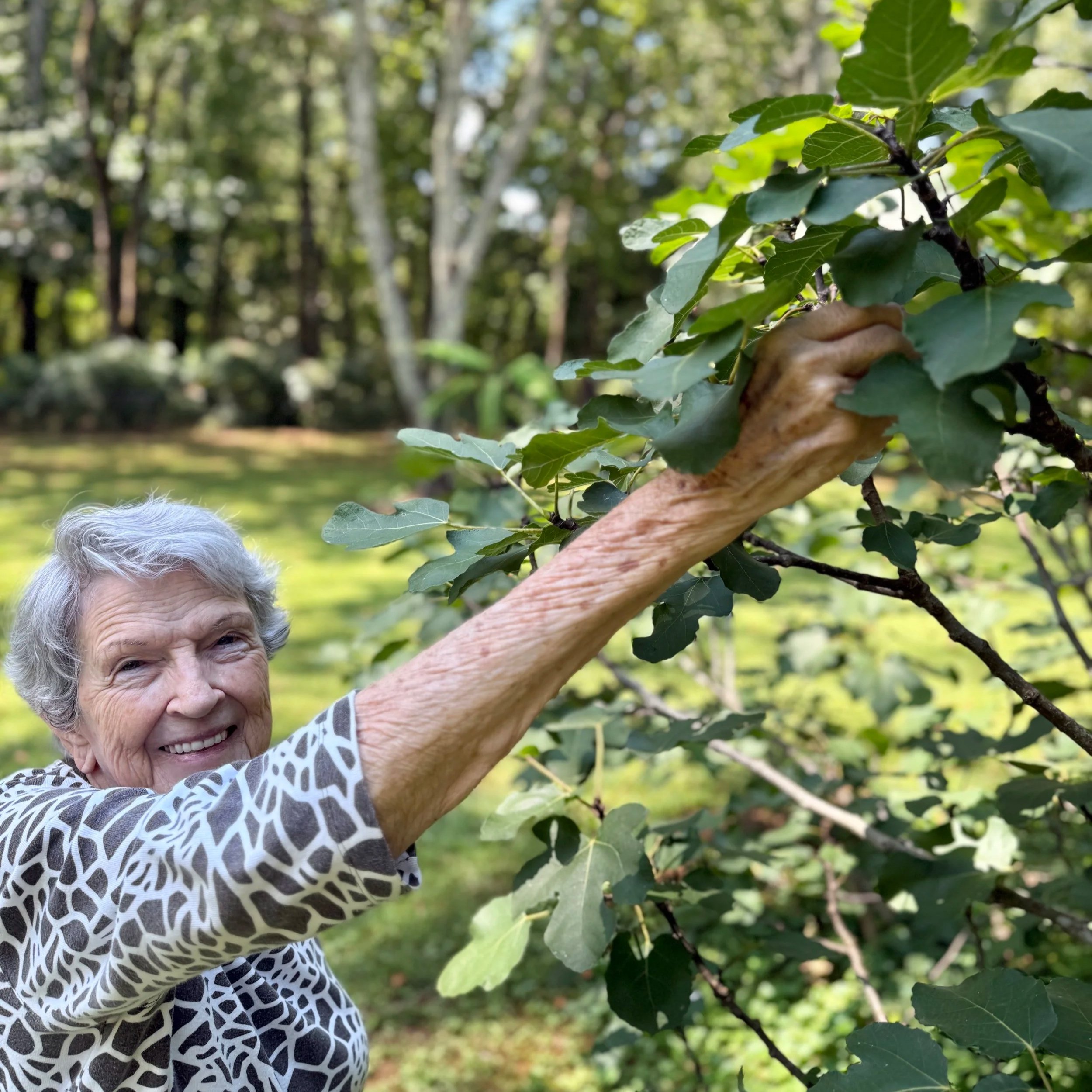
I couldn’t hold back tears when she said it, and I can’t hold them back now as I type. The truth is, while my Nana was doing the hard work of gardening and growing plants… I as her granddaughter watched her do the hard work of humility and forgiveness. She has allowed God to garden her. She did not settle in harder, stubborn soil, with thick weeds of “this is just how I am” tangled about. No, she welcomed the hands of her good Gardener, trusting Him to remove what need to be gone, to make way for the good He wants for her life and for those around her.
As I watch my grandmother step deeper into age, I look at her life much like the fig tree growing in her backyard. Tall, beautiful, quietly growing more and more as she reaches to the Son, to Jesus. She has chosen forgiveness rather than bitter roots. She has asked for forgiveness, even when hiding was an option. She has chosen love, where she could have easily hated. She has chosen humility, even when pride was knocking. She has chosen joy when sadness was paralyzing. She has chosen kindness when malice would have been an easy route. And she has done all of this beside the faithful, kind man she chose to marry so many years ago.
Very much like their fig tree, which produces buckets of figs…my Nana and Papa bloom beautifully beside each other with the fruit our Father delights in seeing.
"…the fruit of the Spirit is love, joy, peace, forbearance, kindness, goodness, faithfulness, gentleness and self-control."
Galatians 5:22-23
Did you know a fig tree doesn’t produce flowers you can see?
The flowers of a fig tree bloom inside the fruit it bears.
The world commonly sees beauty in what the eye beholds. How thankful I am for our good Gardener who knows where to find the blossoms worth having.
If you know my grandmother, you know she doesn’t draw a lot of attention to herself…but when you look in her eyes you can see what’s blooming beautifully beneath. I can only hope, when I am her age, my grandchildren will say the same of me.
From humble beginnings, a seed is planted. Our lives and the lives of those around us will be impacted by the simple, humble acts we choose to place in the soil of our hearts today, tomorrow and each day after.
Planting is simple but it can be hard depending on the state of the soil it’s going into. Reach for Jesus, ask your Father to be the good Gardener He is, and welcome His new garden for your life. He may plant a fig tree in your soul where He chose to plant an apple in another’s. Our job is to humble ourselves like seeds in His mighty hands and trust what He does next.
